
Getting better at systems thinking
Systematising our sense making


If we accept that schools are complex adaptive systems that require systems thinking in order to lead them, then it follows that an important responsibility of school leaders is to get better at systems thinking. The problem here is that it might not come easily. Neil Gilbride’s research shows that our (Headteachers) ability to appreciate the complexity and ambiguity of the systems in which we work are limited by our stage of adult ego development (the ego being the place in the psyche where we make sense of the world around us). Put simply, we need to have disruptive experiences in order to move through stages of adult ego development so this post suggest ways that we can systematise our sense making so that we and the leaders around us can get better at systems thinking.
How we talk about problems
School leadership is problem solving. Experts see the deeper structure of problems rather than just the surface features so creating a routine for how we talk about problems can nudge us into better systems thinking.
1. Are we dealing with a wicked or a tame problem?
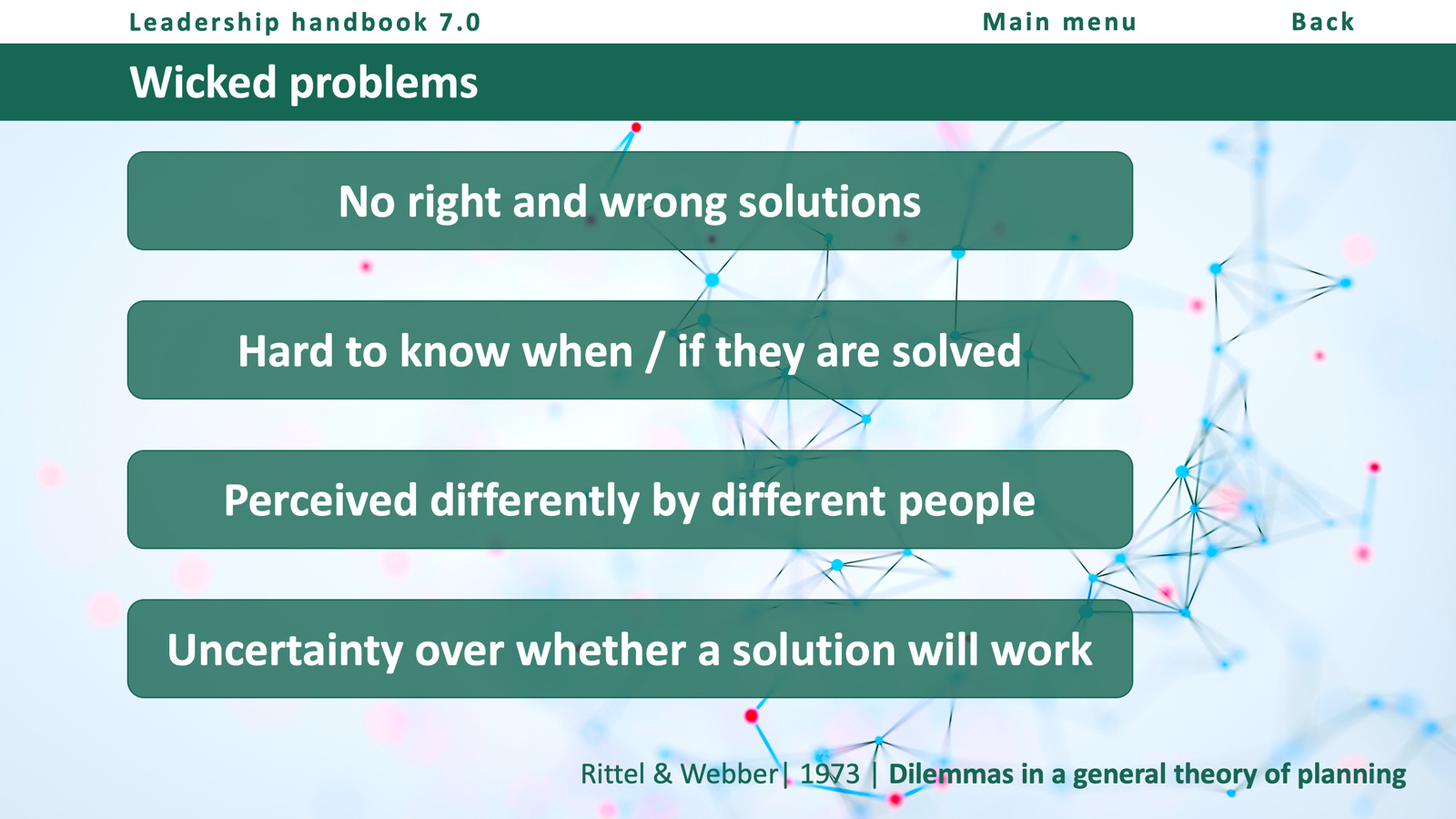
To get better at systems thinking, let’s try and classify the problem before exploring what to do about it - the approach will be different depending on whether we’re tackling a wicked or a tame problem.
2. Move down the ice berg
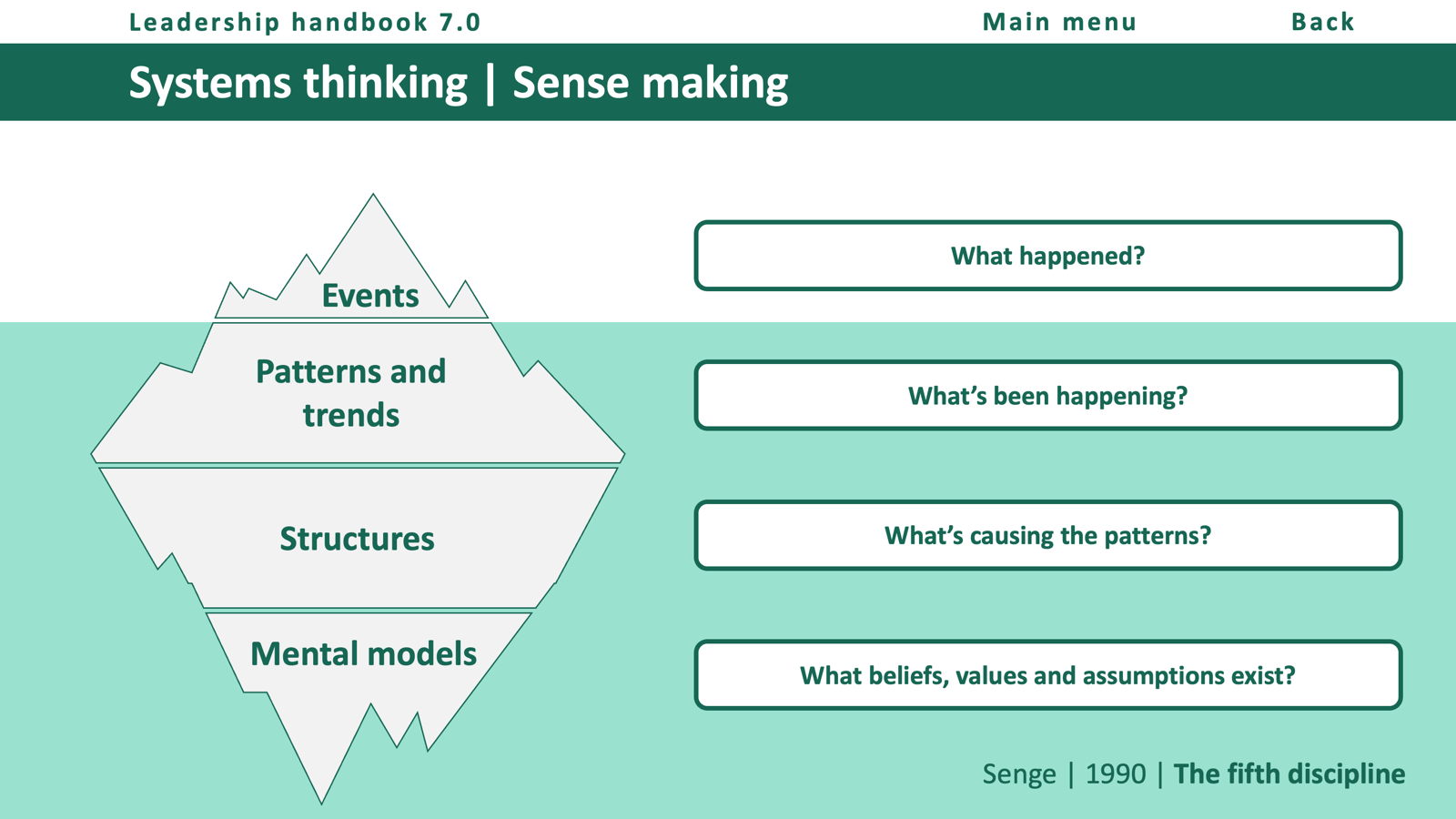
To get better at systems thinking, let’s spend time seeking to understand the underlying causes of the problem before exploring what to do about it.
3. Recognize the system archtypes
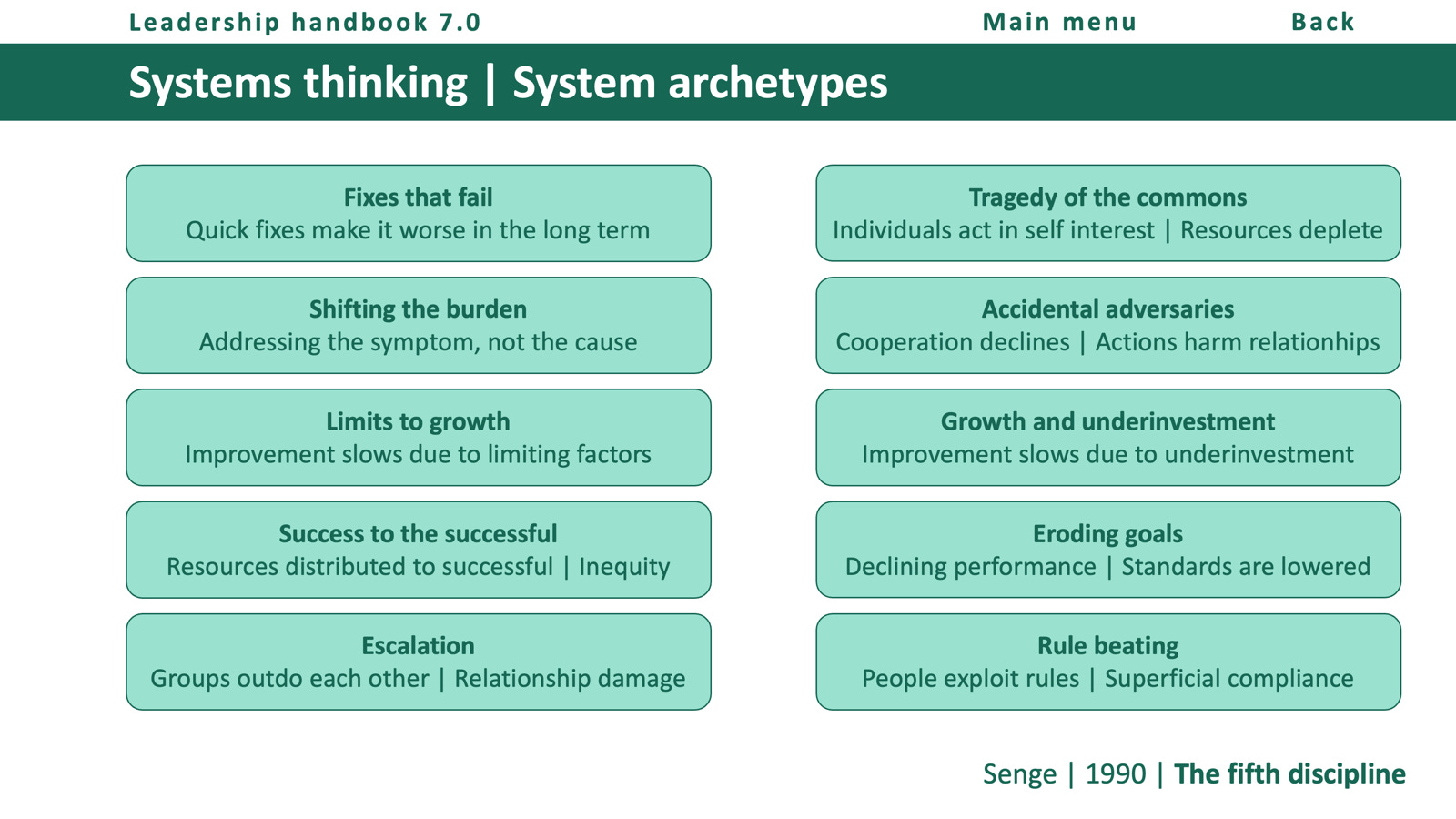
To get better at systems thinking, let’s try and identify the common patterns in complex systems that we are experiencing. When we’re moving down the ice berg, the questions What’s been happening? and What’s causing the patterns? are rather open and require a great deal of knowledge about the reality of school life. Knowing examples of system archetypes can help to identify what’s been happening and what’s causing the patterns by drawing our attention to things that we might not think about naturally.
4. Why do we think what we think?
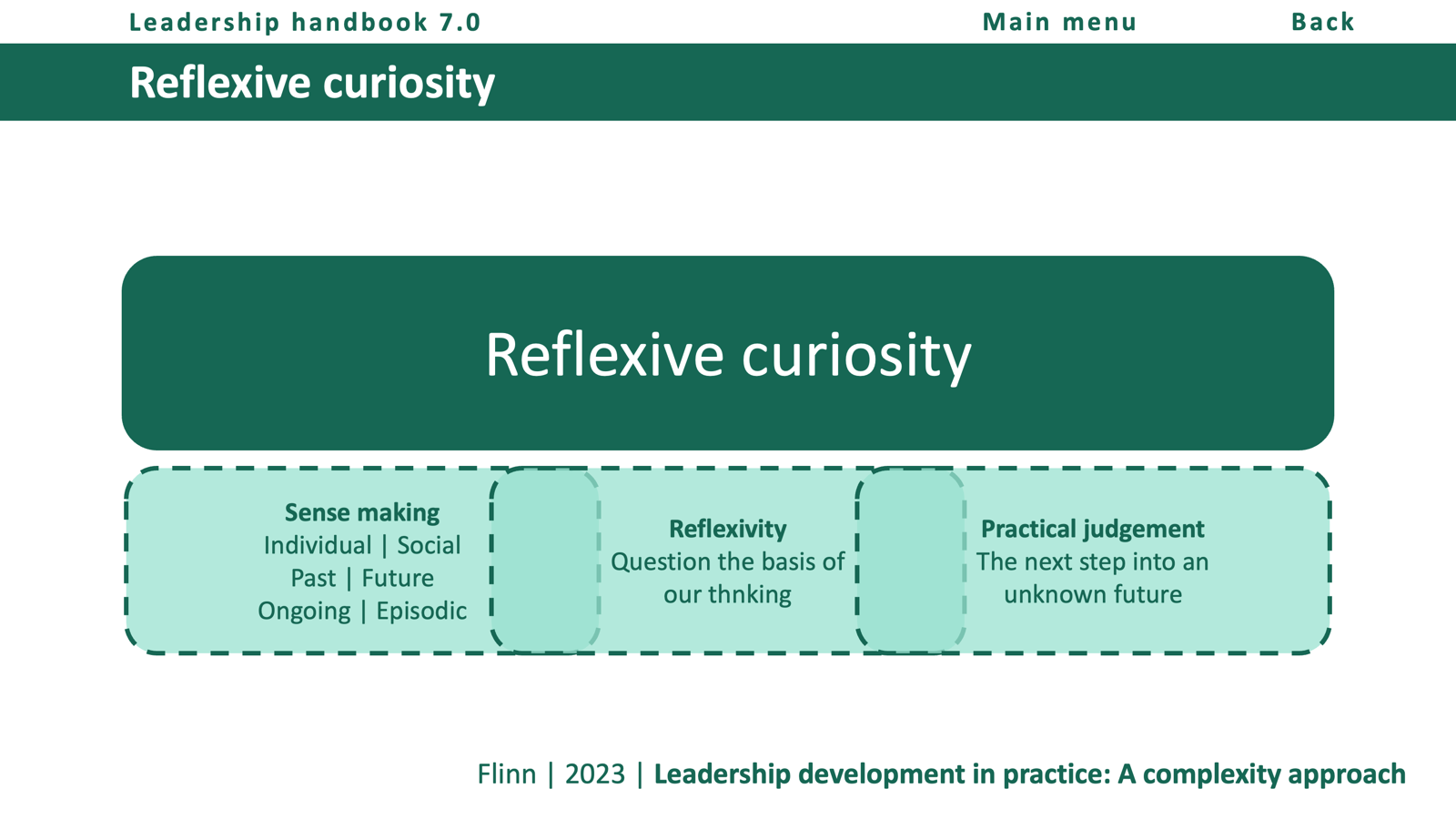
Let’s get better at systems thinking by deliberately being more reflexive. We may start arriving at conclusions after some shared sense making but we all have biases. Questioning the basis of our thinking can help us to surface those biases before we commit to any action.
5. Making decisions | What could happen?
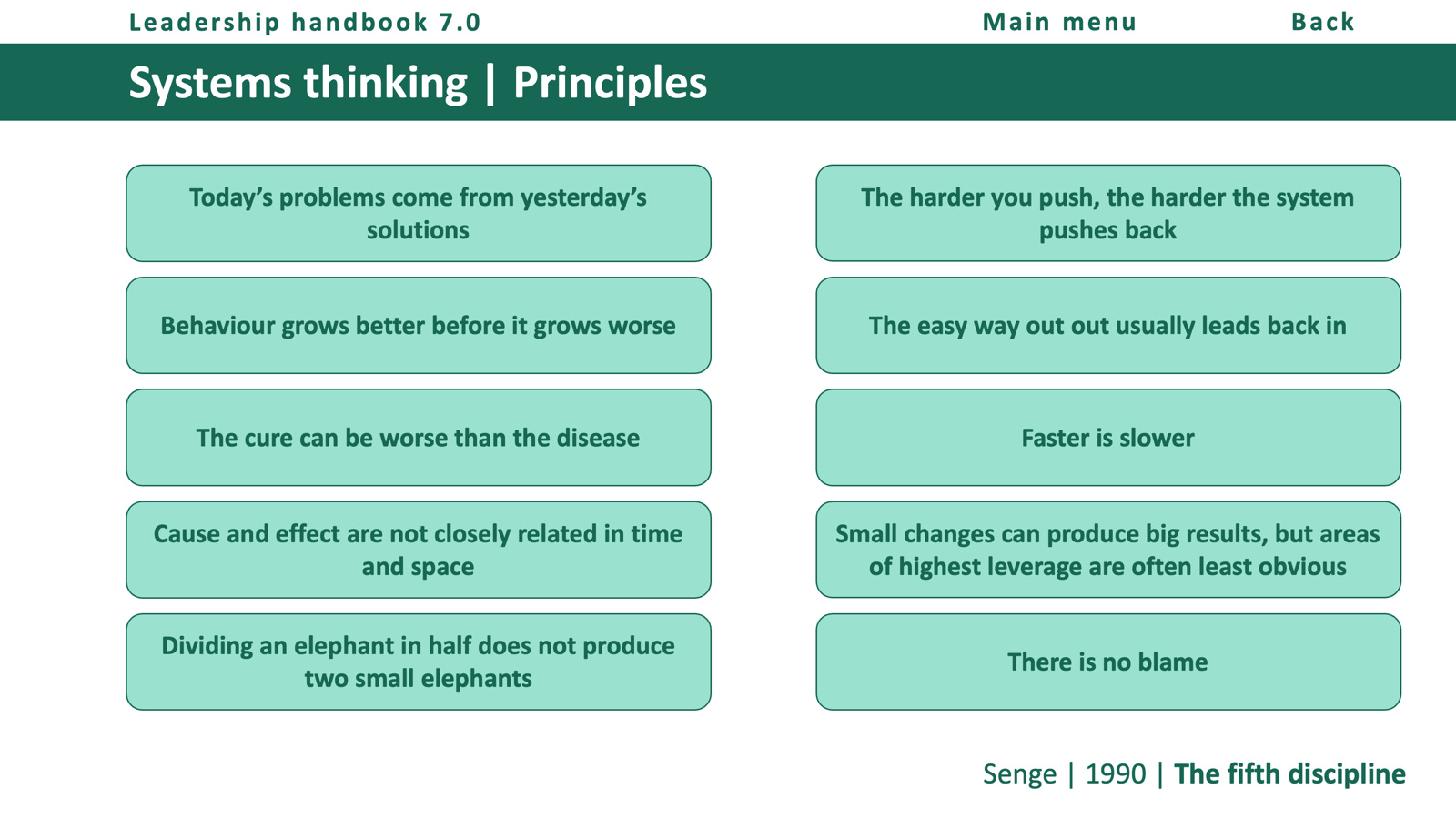
To get better at systems thinking, let’s prompt ourselves to remember the principles of systems thinking before we launch into our solutions. When we get the point of exploring options for decision making, Senge’s systems thinking principles can help us to interrogate possible courses of action and consider the intended and unintended consequences of our options.