
Planning for emergence

In the previous post, I argued that while outcomes in complex systems are difficult to predict, patterns of behaviour are not. We can become more familiar with those patterns and develop a more realistic mental model of school improvement to complement the one we already (and must) have of neat, linear cause and effect.
Much of what sits inside a typical school improvement plan assumes a level of predictability that the system simply doesn’t offer. Goals are defined. Actions are specified. Success criteria are set. Progress is monitored. It is a necessary structure, but it is built on an assumption that if we do the right things, in the right order, we will produce the intended outcomes. And we know, from experience, that it doesn’t quite work like that. So what’s the alternative?
Planning for outcomes vs planning for emergence
Planning for outcomes assumes that we can map a relatively direct path from action to impact. It assumes that the system will respond in broadly predictable ways, and that variation can be managed through clarity, consistency and monitoring. Planning for emergence might hold those same desired outcomes in mind but accepts that they will not unfold in a predictable sequence. It recognises that actions are interpreted and adapted as the team goes about its work, with improvements emerging from the interaction between people, ideas and context.
Going upstream
If plans are often blind to interaction and interpretation, then planning for emergence means shifting attention upstream. Away from refining the wording of actions, tightening success criteria or increasing the frequency of monitoring (all of which are important), and towards:
the conditions that shape behaviour
the quality of interactions between people
the interpretations that influence what people actually do
This is a recognition that the most important drivers of improvement are often the least visible in the plan itself.
(Un)common SIP actions
It is worth pausing here and being honest about what most plans prioritise. Look at a typical SIP and you will see actions like:
Deliver CPD on…
Introduce a new scheme or approach
Implement a consistent strategy across classrooms…
Monitor through learning walks and book scrutiny…
There is nothing inherently wrong with any of these; examples of schools doing this and improving are many. But they reveal a mindset that improvement is a technical problem to be solved through better inputs and tighter implementation. And this is exactly where the patterns described in the previous post emerge. The harder we push, the more the system adapts. The easy way out leads back in. Cause and effect become difficult to trace.
If improvement emerges through patterns of interaction and interpretation, then planning needs to create the conditions in which better patterns are more likely. And what are these conditions?
Intellectual capacity of individuals
Organisational capacity to learn
Upstream of buying that scheme or running that CPD session are deeper cultural conditions that will determine the success of the common actions. Planning for emergence is taking action to improve those conditions so that the common actions we see are more likely to work. Do we have actions on our SIP to improve trust and capacity? We should.
Improve trust
There’s a whole #LeadershipHandbook post on trust but here’s a preview: a synthesis of the things that everyone needs to do regularly for trusting relationships to emerge:
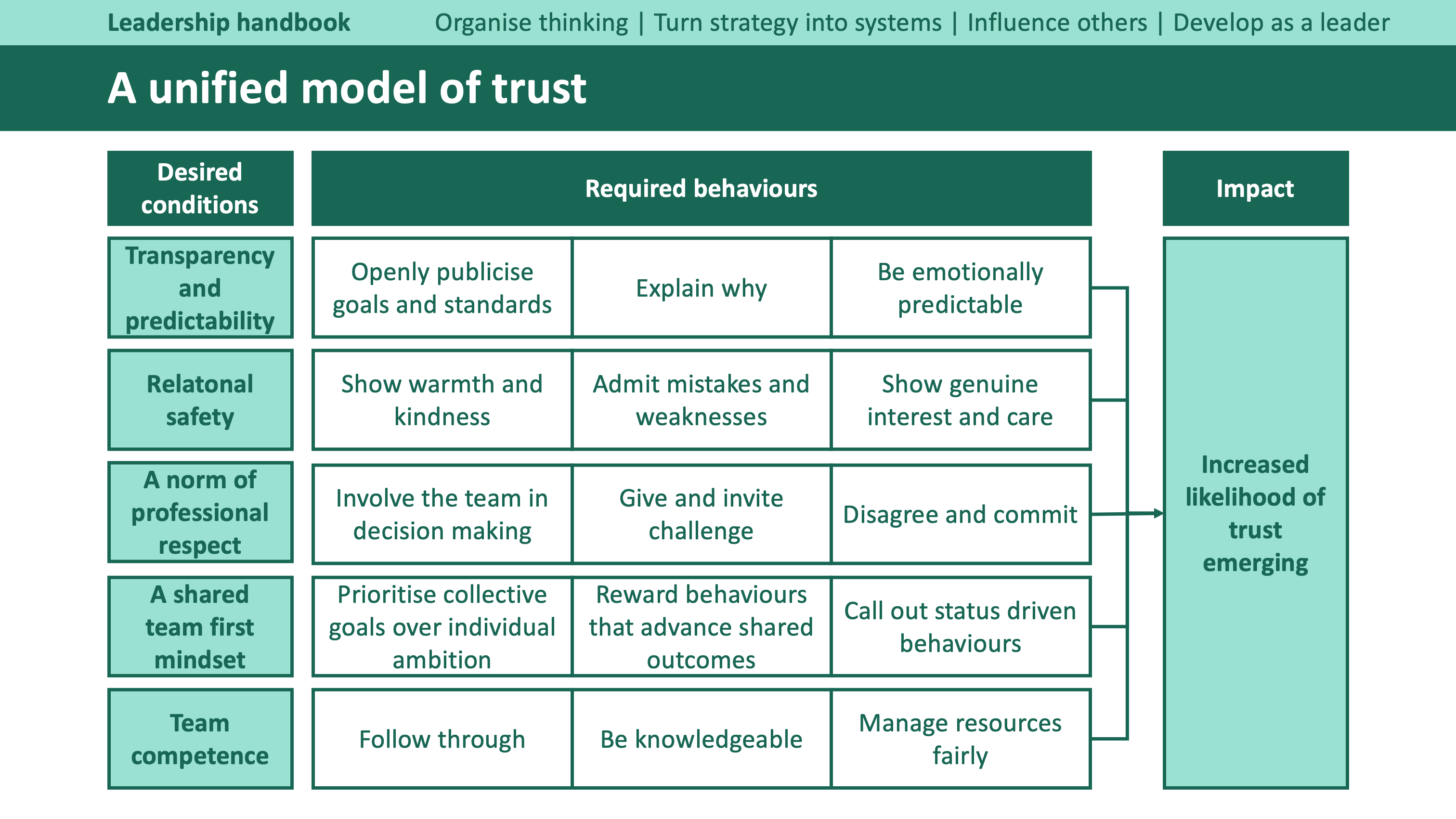
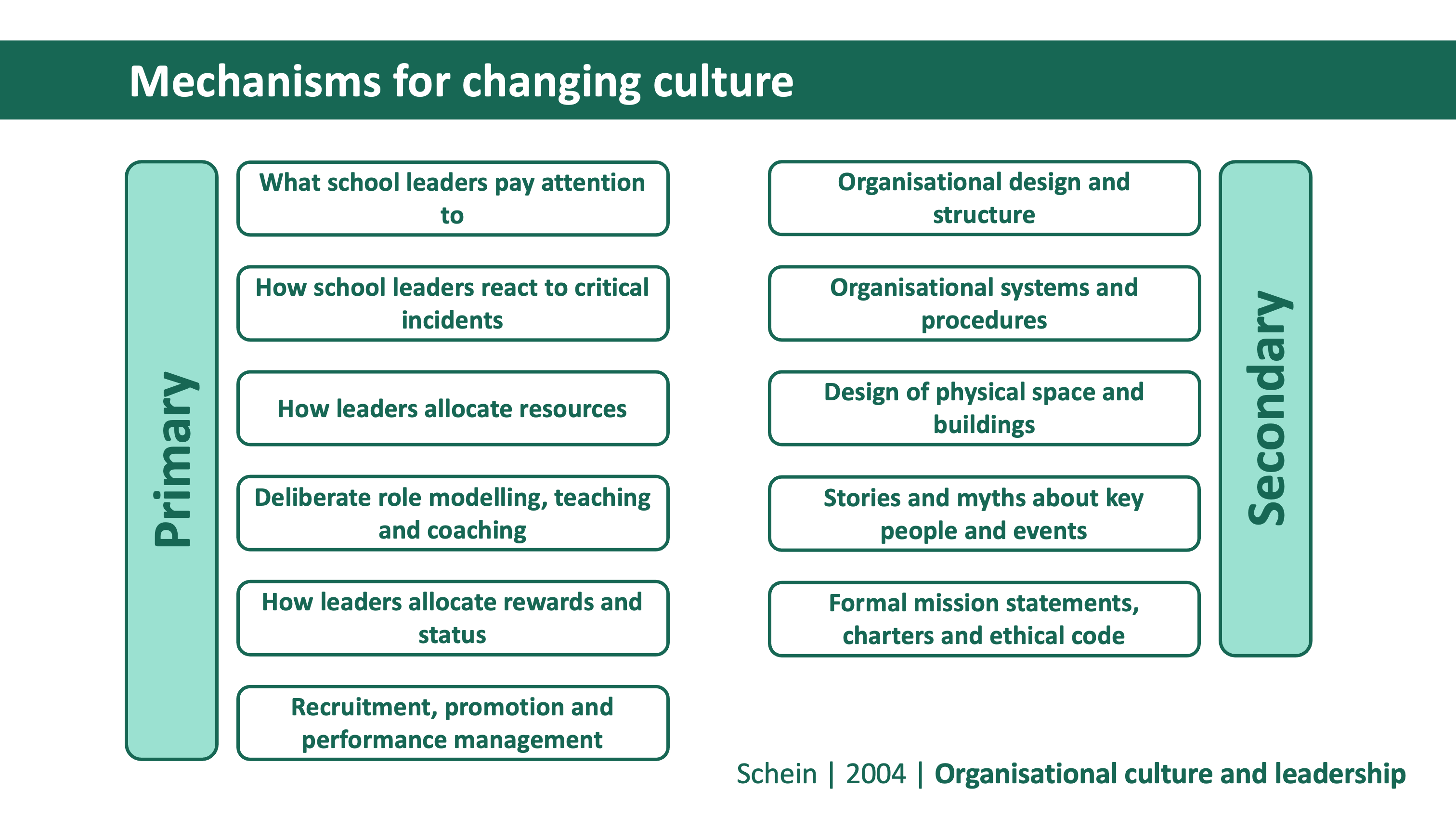
But what do we do with this? First, all leaders ought to position the limiting factor trust in their mental model for school improvement and second, any SIP ought to operationalise these behaviours through various means for example explicit advocation, meeting norms, appraisal. It’s difficult to capture cleanly in an improvement plan but we can lean on Schein’s work on culture to help us direct our efforts:
Build capacity
On an individual level, knowledge is upstream of action. Wider, organisational learning is upstream of improvement. What individuals know about great teaching determines what they are able to notice. Common improvement plan actions might have ‘run CPD sessions’ but this assumes that teachers and leaders can recognise what better looks like and why. Where that knowledge is secure, conversations happen and ideas are refined and challenged. Where it is less secure, the work becomes more procedural. The focus shifts to following the plan rather than thinking about it. Over time, the difference shows up in what people pay attention to, and therefore what they learn. And capacity for learning relies on the extent to which processes are settled, decisions are made once rather than repeatedly and routine work runs without constant intervention. Where that has been done well, attention is freed up. People can think and adapt. Where it hasn’t, the day fills with small, repeeated decisions, logistical friction and competing demands. The work becomes harder to hold in mind.
Leading in complexity
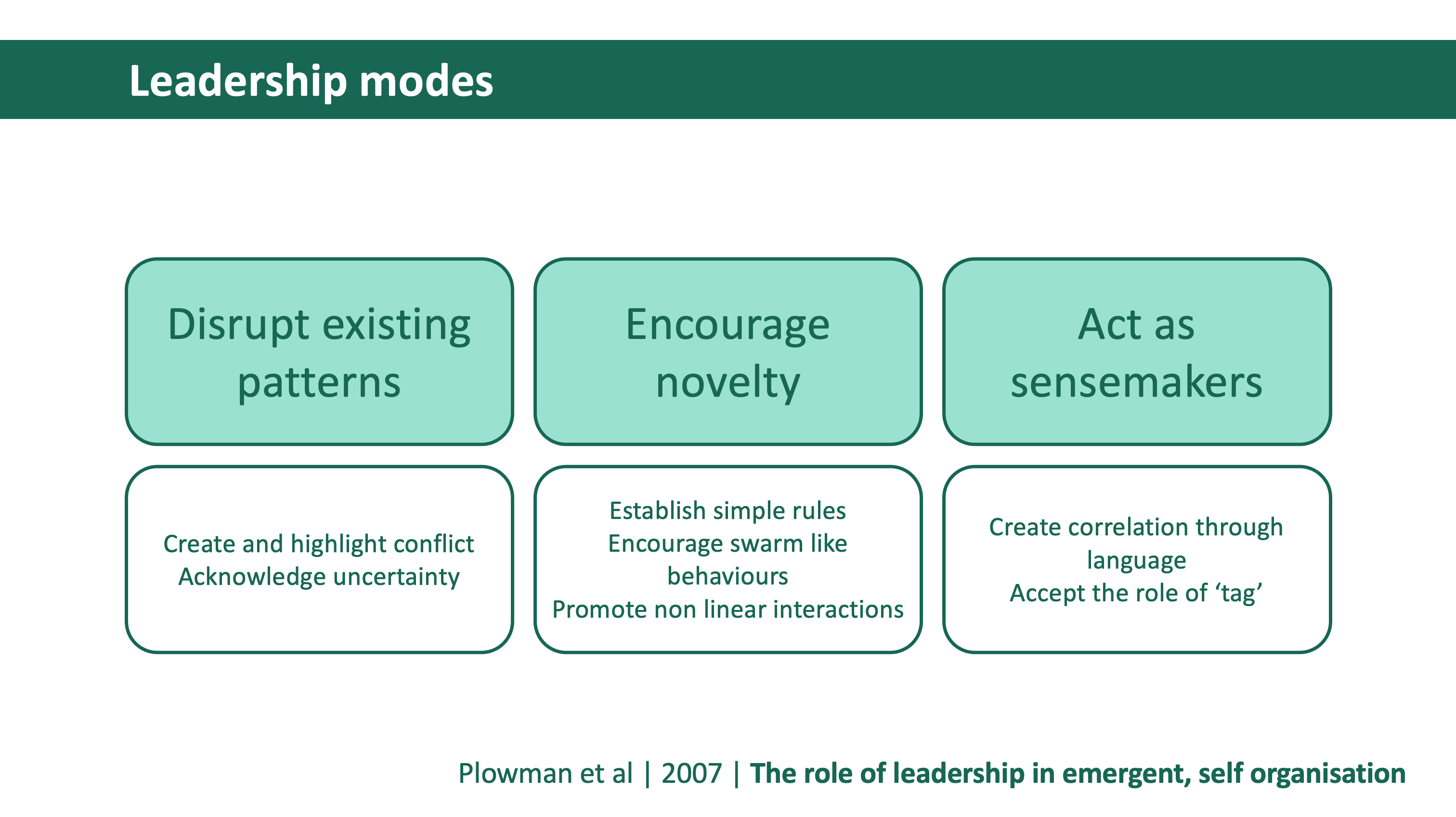
The role of the leader is fundamentally different if the system is complex, not complicated. If cause and effect are distant, the task is to sustain attention on what is emerging. If systems push back, the task is to adapt in response to how the system is behaving. If small changes can produce large effects, the task is to notice leverage opportunities. Spend less time perfecting documents (though they still matter for governance and accountability) and spend more time strengthening shared understanding. Spend less time on tracking whether actions are completed (but this is still important) and spend more time on whether thinking is improving.
None of this removes the need for structure. Plans still matter. They coordinate effort, communicate intent and provide a reference point for accountability. But the real work happens in how people interpret that plan, how they interact with each other in response to it, and how those interactions shape what actually changes. School improvement planning needs to consider the how we’re creating the conditions, the interactions and the interpretations of the problems we’re trying to solve.
A key leadership attribute is listening to perspectives of a variety of colleagues, clarity and coherence of the priorities. Often an SIP is a tickbox set of actions.